Showing posts with label history. Show all posts

Monday, April 25, 2011

The Filipina

I Juander, a television show on GMA NewsTV, tackled the topic of "dalagang Pilipina" tonight. I was able to catch a few whiffs of the program, but I think it's enough to inspire me to write this blog post.

This past second semester, I took my first elective: Kasaysayan 118 or History of Women in the Philippines. It was something I never wanted to take, or even expected to. I merely signed for it to accomplish the required 18 units for the semester.

History, for me, was always boring and, above all, masculine in nature (hello, history!). I didn't think I would enjoy the class; more so when I found out on the first day of school that there were only a few of us. As expected, most of us were females, but there were some males who also signed on.

Anyway, to put it shortly, the semester was not what I had thought it would be. I found myself immersed in the lessons and even spent considerable time in the library reading about the topics. Everything was interesting. But what piqued my interest the most was the fact that Filipinas were freer than we believed them to be.

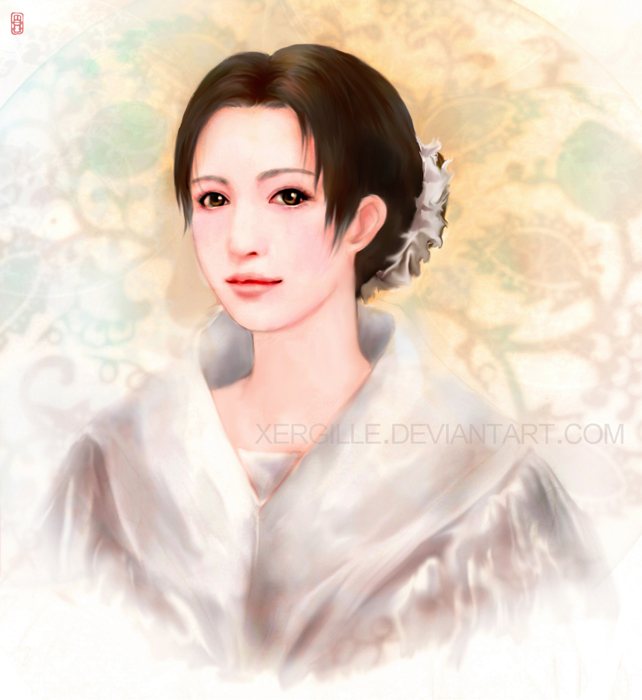
It all began with the "Maria Clara" archetype of the Filipina. This, I say, is not true for all Filipinas. First of all, Maria Clara in Jose Rizal's novels was a privileged young woman: her family was well-to-do. In our discussions, my professor, Ms. Maria Luisa Camagay, said that women from the lower classes enjoyed more freedom than the nobility. It would seem that the effort of the Spanish conquistadors to restrain the woman was not entirely successful. Take for example the cigarreras of the 19th century. Considered to be the first manual laborers, they held a job, received their salary, and were subject to sanctions. There was even documentation of a strike arranged by the cigarreras. They were fighting for an increase in wages.

While the noble women of the time brushed their hair, trimmed their nails, and ate sparingly, others were fighting for their rights as women - as working women.

Also, during the pre-colonial period, the Filipina was prominent in the barangay. The babaylan or the catalona were important figures during that time. Women also exercised certain rights over men with regard to marriage (the man paid the dowry to the woman's family), sex, religion, etc.

So, in spite of the Maria Clara image thrust upon women, I would like to believe that the Filipina is not the timid woman in fancy clothes. I would like to believe that she is a warrior.

Perhaps the freedom women enjoyed during the pre-colonial period can never be fully regained. However, my advocacy is this: that women and men be treated equally, with no one above the other. While women today enjoy the same luxuries as men, we still have a long way to go to attain that state. More must be done - women must be made aware of their rights, and that they can do something about their condition.

(By the way, I really recommend the Kas 118 subject!)

Images from:
https://blogger.googleusercontent.com/img/b/R29vZ2xl/AVvXsEjnLnJ0z-SvIDDYlkvzWkXaE4Gy9rq7RKRN0wsyAX0CcyEd-TKBwnwG6tiSFQKN52CbagaoWCApmPRoLau7yEba8KXVqsX1vR9fP5uyc-OuIA4uppNguWGbs5jwU8bEySCyLYtfcel_B2rd/s320/gabriela+silang+philstar+com.jpg
http://fc07.deviantart.net/fs16/f/2007/126/1/b/Maria_Clara_by_Xergille.jpg

Friday, February 18, 2011

Book Review - Looking back trilogy by Ambeth Ocampo

Rating: 9/10


Ambeth Ocampo's Looking Back trilogy (Looking Back, Dirty Dancing, and Death by Garrote) are essays he wrote for the Philippine Daily Inquirer about historical Filipinos and events (as others say, tsismis). There are, for example, writings about the love story of Andres Bonifacio and Gregoria de Jesus, Pres. Manuel Quezon's temper, and Graciano Lopez Jaena's drinking problem. It's certainly a break from the monotonous books we were made to read in high school - those which glorified the events but made them as distant as Jupiter to us. In this trilogy, Ocampo makes use of data which cannot be gleaned from these books. He delves deep into the lives of heroes and presidents and presents them as people that are vulnerable, in short, just like you and me.

It's a fun read, I'm sure everyone will enjoy it. :)

Book Review - Rizal without the overcoat by Ambeth Ocampo

Rating: 10/10

Ambeth Ocampo's essays about Jose Rizal are compiled in this award-winning volume. At times humorous and thoughtful, Rizal without the overcoat gives the reader a glimpse into the rich life of our national hero. His life and loves are all in here, written in a style that is educational and entertaining at the same time. Ocampo doesn't fail to deliver. :)

Thursday, February 3, 2011

Confessions

I've got a confession to make.

I am turning into a history buff.

Ever since my uncle first introduced me to Ambeth Ocampo's Looking Back, Dirty Dancing, and Death by Garrote, I have been hooked into his books. Right now I'm reading Rizal without the overcoat. I learned a lot of things about our national hero that makes him more 'human'. After that, I want to borrow Luna's moustache.

The thing is, history in Ocampo's essays came alive for me, unlike the boring discussions we used to get in classrooms. Graciano Lopez-Jaena was rendered real with that funny little anecdote about his dirty coat and how his peers would force him to write with a round of drinks. Commonwealth President Manuel Quezon was no longer just the face on a twenty peso bill. I found Andres Bonifacio and Gregoria de Jesus' story very romantic and dramatic, stuff for a primetime telenovela. Actually, the lives of all our heroes could be made into telenovelas, if producers only paid more attention to our history and culture rather than thinking that the people still like mushy love stories with a lot of violence.

It was also quite interesting that even though Jose Rizal is our national hero there is still so much that we don't know about the man. There are dozens of documents pertaining to him and yet students only know two facts: he wrote the Noli and El Fili and was shot on Bagumbayan (now Luneta). There are so many things we miss out on because we're too lazy to read and dig up all these interesting tidbits about our heroes that make them human. For instance, I discovered that Rizal is so thrifty that he would often leave the boarding house to stroll outside. He would look into the windows of restaurants and watch people eat. Then he would go back to the house with a straight face, leaving his landlady thinking that he had enjoyed a good meal. It is also interesting that Filipinos abroad before and today's Overseas Filipino Workers (OFW) have something in common: they both longed for Filipino food. Our heroes had stocks of bagoong and in one essay, it was said that Rizal's specialty was pancit. Fancy Rizal, del Pilar, the Lunas, and their friends eating pancit in Madrid!

The point is, we would appreciate our history more if we only took the time to do more research. I'm dying to go to museums and risk the allergic reactions to see for myself what stuff our heroes left us. Given the chance, I'd love to go around Fort Santiago and see it with clearer eyes.